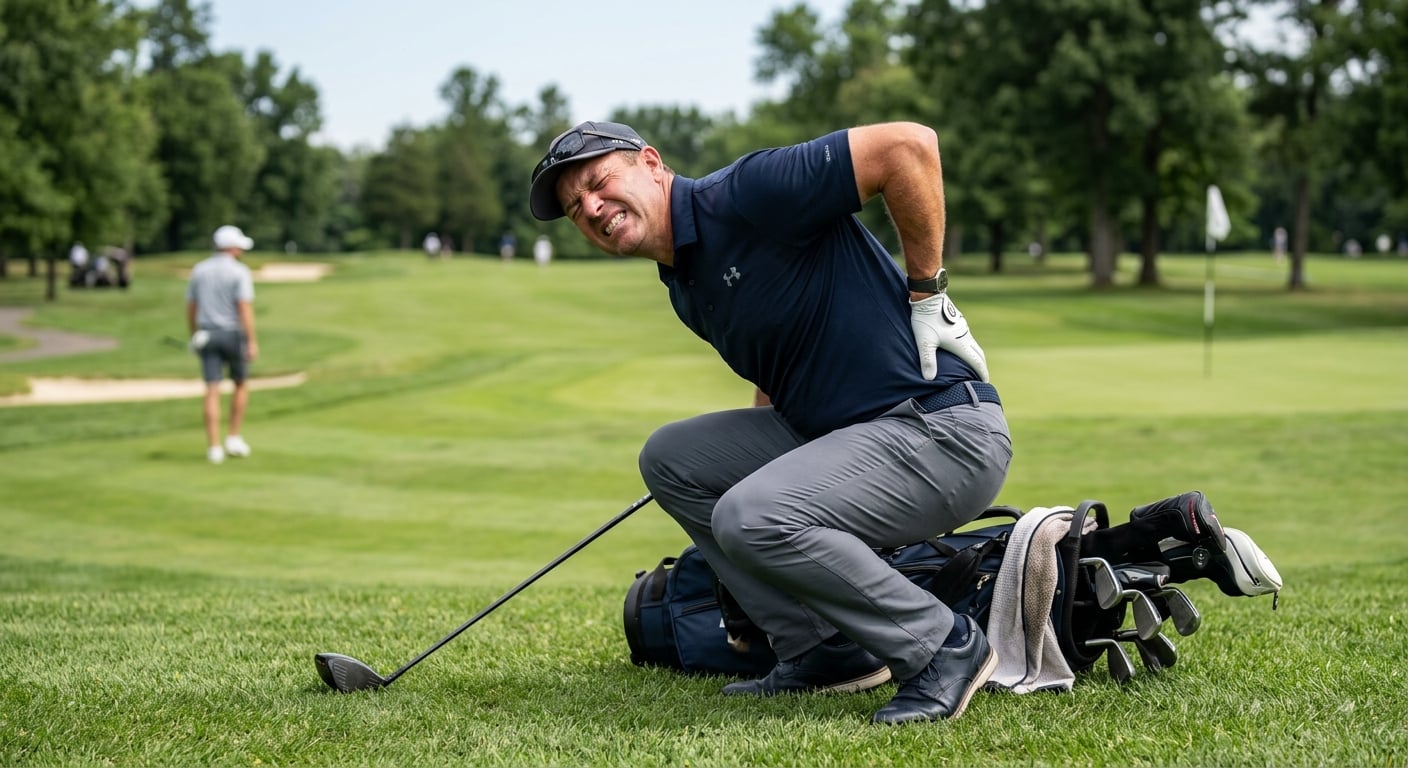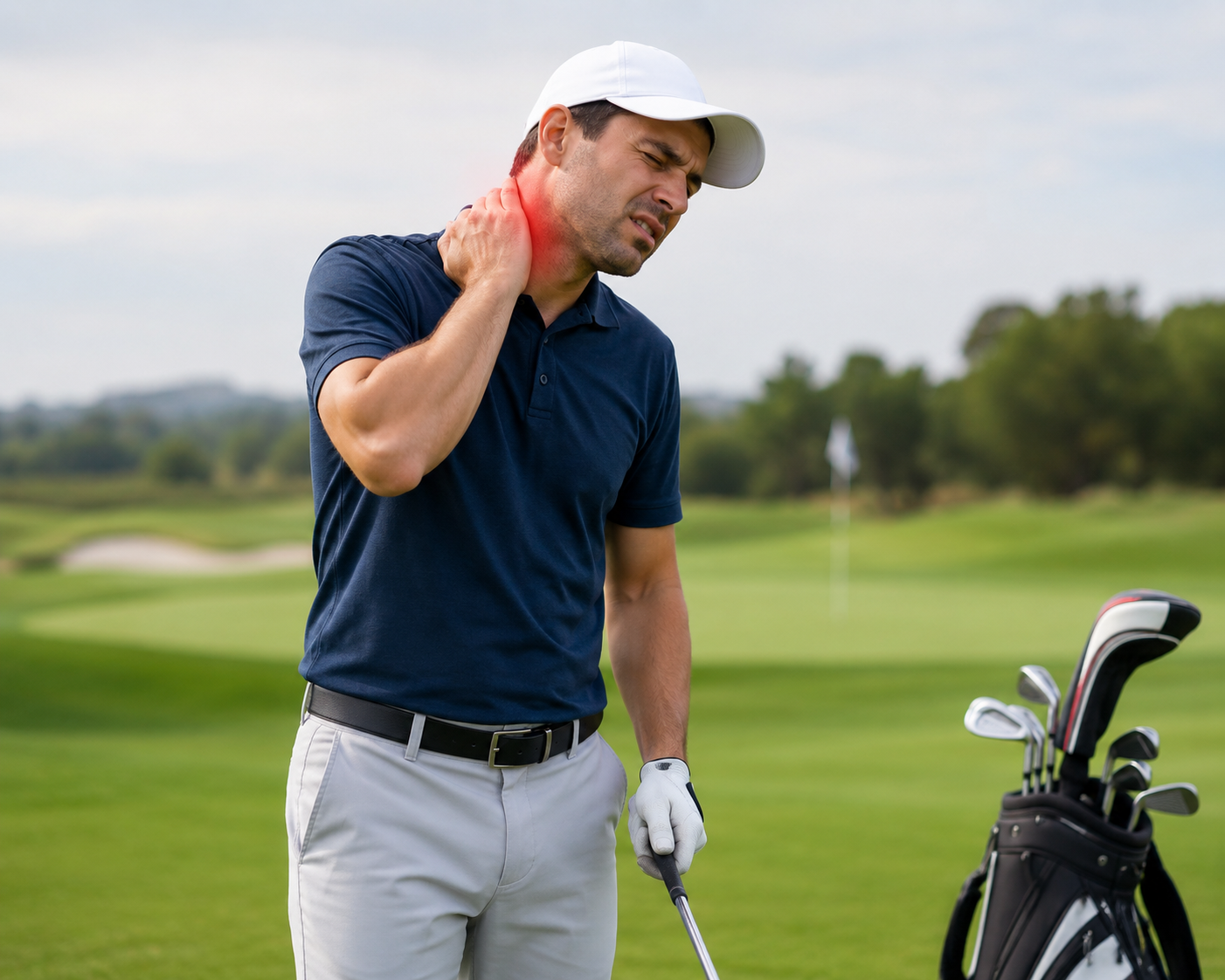

Golf may look like a low-impact sport, but anyone who plays regularly knows how demanding the golf swing can be on the body.
A golf swing requires coordinated movement through the feet, ankles, knees, hips, pelvis, spine, shoulders, elbows, and wrists—all while generating significant rotational force. When mobility, strength, stability, or swing mechanics are limited, certain areas of the body can become overloaded.
As a sports chiropractor at Awaken Chiropractic & Sports Medicine, I regularly work with golfers who want to reduce pain, recover from an injury, and continue playing the sport they enjoy. The goal isn’t simply to make an area feel better. We want to understand why the injury developed and what needs to change to help prevent it from coming back.
Here are some of the most common golf injuries we see in the office.
1. Low Back Pain
Low back pain is one of the most common complaints among golfers.
The golf swing requires substantial rotation through the hips and spine. Repeatedly performing that movement—especially when combined with limited hip mobility or poor thoracic spine rotation—can place additional stress on the lower back.
Golfers may experience:
- Low back tightness
- Aching after playing
- Pain during the backswing or follow-through
- Pain when bending or twisting
- Stiffness the day after playing
- Pain that progressively worsens during a round
One of the biggest mistakes we see is treating the low back as the only problem.
Sometimes the low back is simply the area absorbing movement that should be coming from somewhere else.
For example, limited hip internal rotation or poor thoracic mobility can force the lumbar spine to rotate more than it should.
How a sports chiropractor can help
Treatment may include:
- Chiropractic adjustments
- Soft-tissue therapy
- Hip mobility work
- Thoracic spine mobilization
- Core stabilization
- Glute strengthening
- Golf-specific movement exercises
The goal is to restore the golfer’s ability to rotate efficiently rather than repeatedly stressing the same painful area.
2. Golfer’s Elbow
Despite its name, golfer’s elbow isn’t limited to golfers.
Medically known as medial epicondylitis, golfer’s elbow involves irritation and degeneration of the tissues where the forearm muscles attach to the inside of the elbow.
Golfers may notice:
- Pain on the inside of the elbow
- Pain when gripping the club
- Discomfort during impact
- Forearm tightness
- Pain when lifting or carrying objects
Repeated gripping and loading of the club can contribute to the problem, particularly when combined with excessive training or changes in playing volume.
Treatment for golfer’s elbow
A sports chiropractor may address more than just the painful elbow.
Treatment can include:
- Soft-tissue mobilization
- Instrument-assisted soft-tissue techniques
- Joint mobilization
- Forearm strengthening
- Grip and wrist exercises
- Shoulder and upper-body mobility
- Gradual return-to-golf programming
We also want to identify contributing factors such as grip mechanics, training volume, equipment changes, and mobility restrictions throughout the upper extremity.
3. Shoulder Pain
The golf swing places repetitive demands on the shoulders.
Golfers can develop shoulder pain from overuse, limited mobility, weakness, or problems with the muscles responsible for stabilizing the shoulder blade and shoulder joint.
Common complaints include:
- Pain during the backswing
- Pain during the follow-through
- Pain reaching overhead
- Shoulder stiffness
- Rotator cuff-related pain
- Pain when sleeping on the affected side
A golfer’s shoulder doesn’t work in isolation.
The shoulder blade, thoracic spine, neck, and rib cage all influence how the shoulder moves.
What we look at
When evaluating a golfer with shoulder pain, we may assess:
- Shoulder range of motion
- Rotator cuff strength
- Scapular control
- Thoracic mobility
- Cervical spine movement
- Golf-specific movement patterns
Treatment is then directed at the underlying movement limitations rather than simply chasing the location of the pain.
4. Hip Pain
The hips are critical to an efficient golf swing.
They need enough mobility to allow the pelvis to rotate while also providing enough stability to transfer force through the lower body.
Golfers may develop hip pain because of:
- Limited hip rotation
- Hip flexor tightness
- Glute weakness
- Adductor problems
- Previous hip injuries
- Excessive training or playing volume
Limited hip mobility can also have consequences further up the kinetic chain.
If the hips aren’t rotating effectively, the golfer may compensate through the lumbar spine.
How chiropractic care can help
Treatment may focus on improving:
- Hip internal and external rotation
- Hip extension
- Glute strength
- Pelvic control
- Adductor mobility
- Single-leg stability
For golfers, improving hip function can have benefits beyond reducing pain—it may also improve the way the body moves through the swing.
5. Knee Pain
Golfers place significant rotational and compressive forces through the knees.
Knee pain can occur on either the lead or trail leg and may become noticeable during the swing, walking the course, or getting up and down from the ground.
Common causes can include:
- Patellofemoral pain
- Tendon irritation
- Meniscus-related problems
- Arthritis
- Poor hip strength
- Limited ankle mobility
- Previous injuries
A sports chiropractor will often evaluate the entire lower extremity rather than focusing exclusively on the knee.
For example, limited ankle mobility or poor hip control can change how forces are distributed through the knee.
Treatment may include mobility work, strengthening, soft-tissue techniques, joint mobilization, and golf-specific movement exercises.
6. Wrist and Hand Injuries
The hands and wrists are the final link between the golfer and the club, making them particularly vulnerable to repetitive stress.
Common problems include:
- Wrist tendinitis
- Tendon irritation
- Sprains
- Joint irritation
- Pain with gripping
- Pain during impact
Golfers who dramatically increase their practice volume can be especially susceptible to overuse injuries.
Equipment changes, hitting mats, poor mechanics, and previous injuries can also contribute.
Treatment depends on the specific injury but may include soft-tissue therapy, joint mobilization, strengthening, mobility exercises, and modifications to playing volume.
7. Neck Pain
Golfers spend a significant amount of time in a flexed and rotated posture.
Repeatedly looking down at the ball, rotating during the backswing, and holding the follow-through can contribute to neck stiffness and discomfort.
Golf-related neck pain may involve:
- Cervical joint irritation
- Muscle tightness
- Poor thoracic mobility
- Postural limitations
- Previous neck injuries
At Awaken Chiropractic & Sports Medicine, we often look at the relationship between the neck and the upper back.
A stiff thoracic spine can force the neck to compensate for motion during the golf swing.
Improving mobility throughout the entire upper body can help distribute movement more efficiently.
8. Rib and Mid-Back Pain
Mid-back pain is another issue that can be overlooked in golfers.
The thoracic spine plays an important role in rotation. If it doesn’t move well, the body may compensate elsewhere.
Golfers may experience:
- Pain between the shoulder blades
- Rib discomfort
- Mid-back stiffness
- Pain with rotation
- Tightness after playing
Treatment may involve thoracic spine mobilization, soft-tissue work, breathing mechanics, mobility exercises, and strengthening.
For golfers, thoracic rotation is particularly important because the golf swing is fundamentally a rotational movement.
Why Do Golf Injuries Keep Coming Back?
One of the most important questions we ask is:
Why did the injury happen in the first place?
If treatment only addresses the painful area, the underlying problem may remain.
For example, consider a golfer with recurring low back pain.
The problem may not actually be a “bad back.”
The golfer might have:
- Limited hip rotation
- Poor glute strength
- Limited thoracic mobility
- Poor core control
- Reduced ankle mobility
- A sudden increase in playing volume
If those factors aren’t addressed, the golfer may continue experiencing the same problem.
That’s why a sports chiropractic approach should include both treatment and rehabilitation.
How a Sports Chiropractor Evaluates a Golfer
At Awaken Chiropractic & Sports Medicine, we look at the golfer as a whole rather than treating each body part independently.
An evaluation may include:
Mobility
We assess how well the hips, thoracic spine, shoulders, ankles, and other joints move.
Strength
We look at the muscles responsible for creating and controlling movement.
Stability
Mobility is only useful if you can control it. We assess the body’s ability to stabilize while moving.
Movement Patterns
We look at how the body moves through golf-specific positions.
Injury History
Previous injuries can affect how the body compensates during the swing.
Training and Playing Volume
A golfer who suddenly goes from playing once a week to playing five days a week may be increasing their tissue load faster than their body can adapt.
Chiropractic Treatment for Golf Injuries
Sports chiropractic care can be one component of a comprehensive approach to golf injury recovery.
Depending on the individual golfer and injury, treatment may include:
- Chiropractic adjustments
- Joint mobilization
- Soft-tissue mobilization
- Myofascial techniques
- Stretching
- Mobility exercises
- Strength training
- Core stabilization
- Balance and proprioception exercises
- Golf-specific rehabilitation
The treatment plan should be individualized based on the golfer’s injury, goals, age, training history, and physical findings.
When Should You See a Sports Chiropractor for Golf Pain?
You don’t necessarily have to wait until you’re unable to play.
Consider getting evaluated if you have:
- Pain that repeatedly returns after golfing
- Pain that lasts more than a few days
- Decreasing golf performance because of pain
- Loss of mobility
- Difficulty completing your normal swing
- Pain that progressively worsens
- A new injury that isn’t improving
- Recurring injuries in the same area
Early evaluation can help identify movement limitations before they become a larger problem.
When Should You NOT See a Chiropractor?
Not every golf injury is appropriate for chiropractic treatment alone.
Certain symptoms require evaluation by a medical professional or urgent medical care.
Seek appropriate medical evaluation for symptoms such as:
- Significant trauma
- Suspected fracture
- Severe or rapidly worsening pain
- Significant weakness
- Progressive numbness or loss of sensation
- Loss of bowel or bladder control
- Chest pain or shortness of breath
- Neurological symptoms
- Symptoms that are unexplained or concerning
A good sports chiropractor should recognize when a patient needs additional medical evaluation and coordinate care when appropriate.
The Goal: Keep You Playing Golf
For golfers, successful treatment isn’t simply about eliminating pain on the treatment table.
It’s about getting you back to the things you want to do:
Play 18 holes.
Practice without pain.
Walk the course.
Play in your weekend tournament.
Train in the gym.
And ultimately, keep playing golf for years to come.
At Awaken Chiropractic & Sports Medicine, our approach to golf injuries combines hands-on care with movement, strength, mobility, and rehabilitation strategies designed around the individual golfer.
If you’re dealing with golf-related pain or an injury that’s affecting your game, don’t simply try to play through it.
Find out why it’s happening and build a plan to fix it.
Ready to Get Back on the Course?
If golf pain is limiting your game, a sports chiropractic evaluation can help identify the mobility, strength, and movement factors contributing to your symptoms.
Awaken Chiropractic & Sports Medicine works with active individuals and golfers throughout the Highlands Ranch and surrounding South Denver area.
Contact us to schedule an evaluation and create a plan to get you back to doing what you love—playing your best golf.