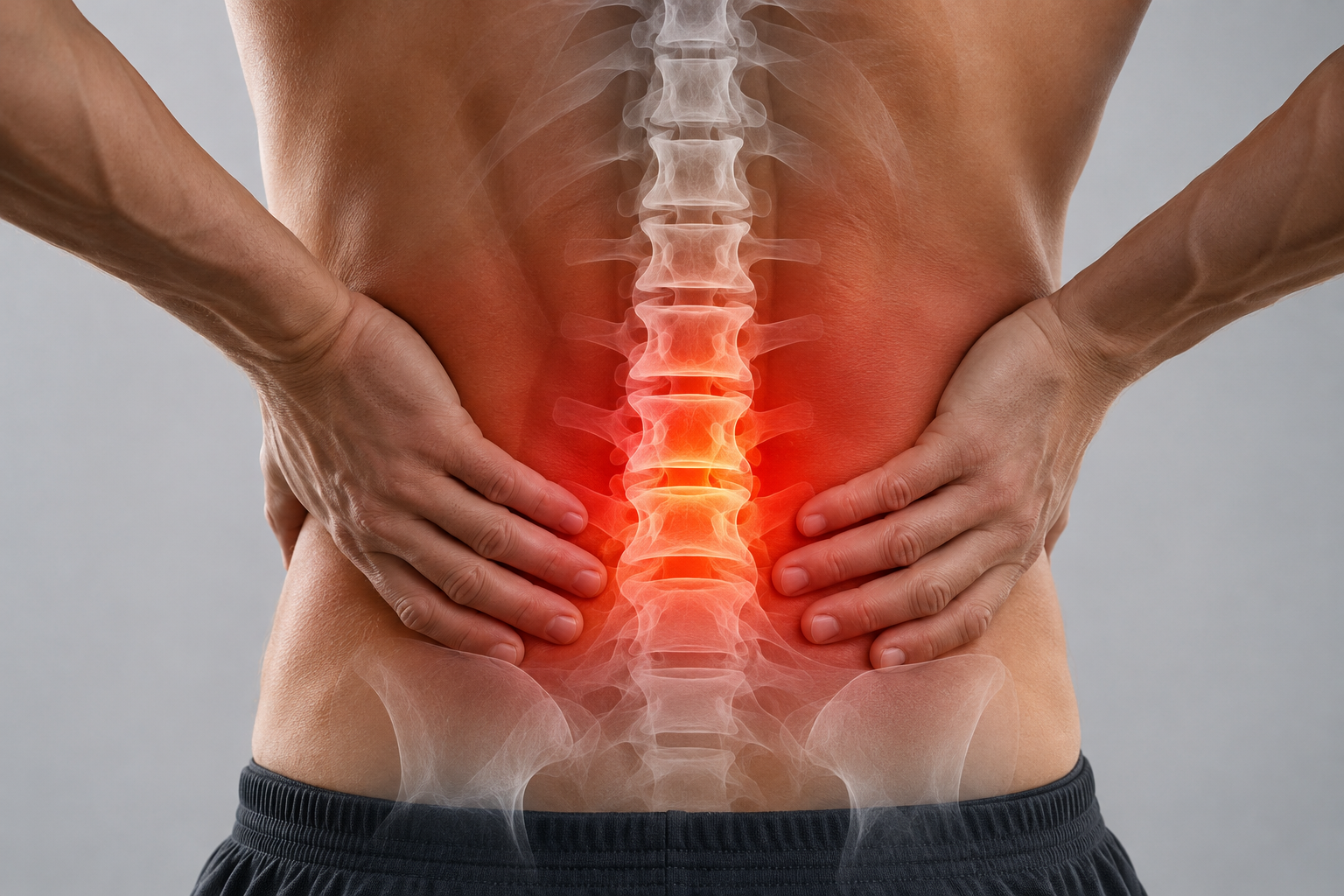

Low back pain can make everyday activities difficult. Whether you struggle with sitting at a desk, bending forward, exercising, golfing, or simply getting out of bed in the morning, persistent lower back pain can significantly affect your quality of life.
For some people, the problem may involve more than tight muscles or stiff joints. Conditions involving the spinal discs, including disc bulges, herniated discs, and degenerative disc changes, can contribute to persistent lower back pain and sometimes irritation of the nerves traveling into the legs.
One treatment option that patients frequently ask about is non-surgical spinal decompression.
At Awaken Chiropractic and Sports Medicine, we believe treating low back pain should involve understanding the underlying cause of symptoms, restoring proper movement, and helping patients return to the activities they enjoy.
In this article, we will explain what spinal decompression is, how it works, which conditions it may help address, and whether it could be an appropriate part of your lower back pain treatment plan.
What Is Spinal Decompression?
Spinal decompression is a treatment approach designed to apply controlled forces to the spine to reduce compressive loading and gently separate spinal segments.
Non-surgical spinal decompression typically uses a specialized motorized table that allows a patient to lie comfortably while a computer-controlled system applies intermittent or varying pulling forces to the lower back.
The goal is to create periods of reduced loading across the spinal segments and potentially change the mechanical environment surrounding the intervertebral discs and nearby structures.
Spinal decompression is different from traditional spinal manipulation or chiropractic adjustments.
- Spinal adjustments: Apply controlled forces to spinal joints to improve mobility and address joint-related restrictions.
- Traditional traction: Uses pulling forces to temporarily stretch or unload the spine.
- Non-surgical spinal decompression: Uses a specialized motorized system to apply programmed, controlled traction forces.
Although these treatments share some similarities, they are not interchangeable, and the evidence supporting their effectiveness differs.
How Does Spinal Decompression Work?
To understand spinal decompression, it helps to understand the anatomy of your lower back.
Your lumbar spine consists of five vertebrae separated by intervertebral discs. These discs act as shock absorbers and help distribute forces during everyday activities.
Each disc consists of two primary components:
- Annulus fibrosus: The strong outer layers of the disc.
- Nucleus pulposus: The softer, gel-like center of the disc.
Over time, repetitive loading, age-related changes, injury, and other factors can contribute to disc degeneration or injury.
When a disc becomes irritated or herniates, nearby nerve structures may also become irritated, potentially producing pain in the lower back, buttocks, or legs.
Non-surgical spinal decompression attempts to apply controlled traction to the lumbar spine. Researchers have investigated whether this can:
- Temporarily reduce compressive forces across spinal segments.
- Change pressure conditions within the intervertebral discs.
- Reduce mechanical irritation of nearby structures.
- Improve tolerance to movement and everyday activities.
It is important to understand that spinal decompression does not physically push a herniated disc back into place or guarantee disc regeneration. The clinical benefits are not fully established, and results vary between patients.
What Conditions Can Spinal Decompression Help With?
Spinal decompression is commonly marketed for several lower back conditions. However, not every condition responds equally, and having a particular MRI finding does not automatically mean decompression is appropriate.
Some conditions where clinicians may consider a decompression-based approach include:
1. Herniated or Bulging Discs
A lumbar disc herniation occurs when disc material extends beyond its normal boundaries. Depending on its location and the surrounding anatomy, it may contribute to irritation or compression of a nearby nerve root.
Common symptoms can include:
- Persistent lower back pain.
- Pain traveling into the buttocks or legs.
- Pain that worsens with prolonged sitting.
- Increased discomfort with bending or lifting.
- Tingling or numbness in the leg or foot.
Spinal decompression is sometimes used as one component of conservative care for patients with disc-related symptoms.
However, evidence supporting specialized mechanical decompression as a reliable treatment for disc herniation remains limited. Treatment should be based on a thorough examination rather than an MRI finding alone.
2. Sciatica
Sciatica describes pain associated with irritation of the sciatic nerve or its contributing nerve roots.
Symptoms may include:
- Sharp or shooting pain traveling down one leg.
- Burning sensations in the buttock or leg.
- Tingling or numbness.
- Symptoms extending below the knee.
- Discomfort with sitting, bending, or certain movements.
One potential contributor to sciatica is a lumbar disc herniation that irritates a nerve root.
When an examination suggests disc-related nerve irritation, a chiropractor may consider whether a decompression-based treatment is appropriate as part of a broader rehabilitation plan.
The goal is not simply to stretch the lower back. It is to address the patient’s symptoms, improve movement tolerance, and progressively restore strength and function.
3. Degenerative Disc Disease
Degenerative disc disease describes age-related or progressive changes in the intervertebral discs.
As discs change over time, they may lose some of their normal hydration, height, and ability to distribute mechanical loads.
Potential symptoms include:
- Chronic lower back discomfort.
- Stiffness after prolonged sitting.
- Pain with repetitive bending.
- Discomfort after extended standing.
- Reduced tolerance for physical activity.
It is important to recognize that disc degeneration is common, even in people without back pain. Imaging findings must be interpreted alongside a patient’s symptoms and examination.
Spinal decompression may be considered in selected cases, but it has not been established as a way to reverse degenerative disc disease or restore normal disc anatomy.
4. Lumbar Radiculopathy
Lumbar radiculopathy occurs when a nerve root in the lower back becomes irritated or compressed.
Unlike isolated lower back pain, radiculopathy often produces symptoms that travel into the leg.
Patients may experience:
- Radiating leg pain.
- Numbness or tingling.
- Changes in sensation.
- Muscle weakness.
- Altered reflexes.
Because radiculopathy can have several causes, identifying the source of nerve irritation is particularly important before choosing a treatment.
Spinal decompression is not appropriate for every patient with nerve symptoms, especially when significant or progressive neurological deficits are present.
Does Spinal Decompression Actually Work?
This is one of the most important questions patients ask.
The honest answer is that research on spinal decompression and mechanical traction has produced mixed results.
Some patients report improvements in pain and function following decompression-based treatments. However, research has not consistently demonstrated that mechanical traction provides meaningful additional benefits for all people with low back pain.
For example, clinical practice guidelines from the Academy of Orthopaedic Physical Therapy and the American Physical Therapy Association do not support routine traction for chronic low back pain with leg pain.
The World Health Organization also recommends against using traction as a routine treatment for chronic primary low back pain.
There is an important distinction between these findings and saying that no individual patient can benefit. Certain patients may respond differently depending on their symptoms, examination findings, and the underlying cause of their pain.
At Awaken Chiropractic and Sports Medicine, we believe treatment decisions should be based on clinical findings, realistic expectations, and measurable improvements in function rather than promises about what a machine can accomplish.
The most important question is not whether spinal decompression works for everyone. It is whether it is an appropriate treatment option for your particular condition.
Spinal Decompression vs. Traditional Chiropractic Treatment
Patients often wonder whether they should choose spinal decompression, chiropractic adjustments, physical therapy, or a combination of treatments.
These approaches serve different purposes.
| Treatment | Primary goal |
|---|---|
| Spinal decompression | Apply controlled traction forces to the spine |
| Chiropractic adjustments | Improve spinal joint mobility |
| Soft tissue therapy | Address muscle and surrounding soft tissue restrictions |
| Therapeutic exercise | Improve strength, stability, and movement control |
| Mobility exercises | Restore comfortable movement and flexibility |
For many patients, a combination of treatments may be more appropriate than relying on a single intervention.
For example, a patient with chronic low back pain and disc-related symptoms may benefit from an individualized plan that includes appropriate manual therapy, progressive strengthening, mobility work, and modifications to aggravating activities.
The objective should be to improve the patient’s ability to move, exercise, work, and participate in recreational activities.
What Does a Spinal Decompression Treatment Feel Like?
Patients are often curious about what happens during a spinal decompression appointment.
Although equipment and treatment protocols vary, a typical session involves the following:
- The patient lies on a specialized decompression table.
- A harness or stabilization system is positioned around the pelvis and sometimes the upper body.
- The treatment system applies controlled pulling forces to the lumbar spine.
- The forces may alternate between periods of increased tension and relaxation.
- The clinician monitors the patient’s comfort and response throughout treatment.
Treatment should not cause sharp, worsening, or radiating pain.
The appropriate treatment intensity and duration depend on the equipment, the patient’s condition, and clinical judgment.
Spinal decompression is not a one-size-fits-all treatment. Patients should be reassessed to determine whether it is producing meaningful improvements.
How Many Spinal Decompression Treatments Do You Need?
There is no universal number of spinal decompression treatments that every patient needs.
The appropriate treatment plan depends on several factors:
- How long the symptoms have been present.
- Whether pain is isolated to the lower back or travels into the leg.
- The suspected underlying condition.
- Neurological examination findings.
- Overall physical health and activity level.
- Response to initial treatment.
Some clinics advertise predetermined treatment packages, but the number of sessions should not be determined before understanding the patient’s condition.
At Awaken Chiropractic and Sports Medicine, the focus should be on monitoring progress and determining whether treatment is helping.
If a patient is not improving, the treatment approach should be reassessed rather than simply continuing the same protocol.
Who Is a Good Candidate for Spinal Decompression?
Spinal decompression may be considered for selected patients experiencing persistent lower back pain, particularly when their symptoms and examination suggest a possible disc-related component.
Potential candidates may include individuals with:
- Certain lumbar disc herniations.
- Disc-related lower back pain.
- Selected cases of lumbar radicular pain.
- Persistent symptoms that have not adequately improved with initial conservative treatment.
However, spinal decompression is not appropriate for everyone.
Patients with certain fractures, spinal instability, severe osteoporosis, recent spinal surgery, or other significant medical conditions may require alternative treatment approaches or medical clearance.
Patients with progressive neurological weakness, significant changes in bowel or bladder function, or numbness in the saddle region require urgent medical evaluation rather than routine decompression treatment.
A proper clinical examination is essential before starting care.
What Should You Do Alongside Spinal Decompression?
One of the biggest mistakes in treating chronic lower back pain is focusing exclusively on passive treatments.
Even when a patient responds well to spinal decompression, improving long-term function requires restoring the body’s ability to tolerate physical demands.
At Awaken Chiropractic and Sports Medicine, a comprehensive approach to low back pain should consider several factors.
1. Improve spinal and hip mobility
Restricted movement in the hips and thoracic spine can influence how the lower back handles everyday activities. Appropriate mobility exercises can help improve overall movement.
2. Strengthen the core
The abdominal and trunk muscles contribute to controlling movement and transferring forces through the spine.
Exercises such as bird dogs, modified planks, dead bugs, and other progressive stabilization exercises may be incorporated based on individual tolerance.
3. Strengthen the hips and glutes
The gluteal muscles play an important role in walking, lifting, running, and athletic activities.
Exercises such as bridges, hip hinges, and progressive resistance training can help improve lower-body strength.
4. Gradually return to physical activity
Avoiding all activity for extended periods is generally not the best long-term strategy for most people with low back pain.
Walking, appropriate exercise, and gradual exposure to normal activities can help rebuild confidence and physical capacity.
5. Address lifestyle and training factors
Prolonged sitting, sudden increases in training volume, poor recovery, and repetitive loading may contribute to symptom aggravation.
Understanding these factors can help patients better manage their symptoms and reduce future flare-ups.
Why Choose Awaken Chiropractic and Sports Medicine for Low Back Pain?
At Awaken Chiropractic and Sports Medicine, our approach to low back pain is centered on identifying the factors contributing to your symptoms and developing an individualized treatment strategy.
We recognize that not all lower back pain is the same.
Some patients experience muscular pain, others have joint-related restrictions, and some have symptoms associated with disc injuries or nerve irritation.
Our sports chiropractic approach emphasizes evaluating the entire kinetic chain, including:
- Lumbar spine mobility.
- Hip mobility and strength.
- Core stability.
- Pelvic mechanics.
- Muscle function.
- Movement patterns.
- Activity and training demands.
Rather than focusing exclusively on short-term pain relief, our goal is to help patients improve movement, build strength, and return to the activities that matter to them.
Whether your goal is returning to the gym, playing golf, running, lifting weights, or simply enjoying daily activities without persistent back pain, your treatment should reflect those goals.
If spinal decompression is an appropriate option, it should be considered as part of a larger treatment strategy rather than a guaranteed stand-alone solution.
Frequently Asked Questions About Spinal Decompression
Is spinal decompression good for a herniated disc?
Spinal decompression is sometimes used as a conservative treatment option for patients with lumbar disc herniations. However, research has not consistently established its effectiveness. Whether it is appropriate depends on the patient’s symptoms, examination findings, and overall condition.
Can spinal decompression help sciatica?
It may be considered for selected patients whose sciatica is associated with lumbar disc-related nerve irritation. However, sciatica has multiple possible causes, and decompression is not appropriate for every patient.
Is non-surgical spinal decompression painful?
Most patients should find treatment tolerable. It generally involves lying on a specialized table while controlled traction forces are applied. Treatment should not produce sharp or worsening symptoms.
How long does spinal decompression take?
Treatment times vary depending on the equipment and clinical protocol. Individual sessions may take approximately 20–45 minutes, although the exact duration should be determined by the treating clinician.
Is spinal decompression the same as a chiropractic adjustment?
No. Chiropractic adjustments apply controlled forces to spinal joints to address mobility restrictions. Spinal decompression uses traction forces to temporarily unload spinal segments. They are different treatment approaches.
Can spinal decompression fix degenerative disc disease?
There is currently insufficient evidence to conclude that spinal decompression reverses disc degeneration, restores normal disc height, or regenerates damaged discs. It should not be marketed as a cure for degenerative disc disease.
How do I know if I need spinal decompression?
The best starting point is a comprehensive examination. A chiropractor can evaluate your symptoms, movement patterns, neurological function, and medical history to determine whether decompression or another treatment approach is appropriate.
When should I seek medical attention for lower back pain?
Seek urgent medical evaluation if you experience new loss of bladder or bowel control, numbness around the groin or saddle region, or significant or progressive leg weakness. Severe symptoms following trauma or back pain accompanied by concerning systemic symptoms also warrant prompt medical assessment.
Looking for Spinal Decompression or Lower Back Pain Treatment in Highlands Ranch, CO?
Living with persistent lower back pain can be frustrating, especially when it prevents you from exercising, working, playing golf, or enjoying everyday activities.
You do not have to guess which treatment is right for you.
At Awaken Chiropractic and Sports Medicine, we take an individualized approach to evaluating and treating lower back pain. Our goal is to understand what is contributing to your symptoms and help you determine which treatment options may be appropriate.
If you are experiencing lower back pain, a herniated disc, or sciatica, contact Awaken Chiropractic and Sports Medicine to schedule an evaluation and discuss your treatment options.
Awaken Chiropractic and Sports Medicine
Highlands Ranch, Colorado
Your goal shouldn’t just be to get out of pain. It should be to get back to doing what you love.